
For seniors and individuals with special needs, the home is a sanctuary – a place of comfort, familiarity, and independence. However, it can also present hidden hazards, with falls being a leading cause of injury and a significant concern for families. At Patient Care Of Houston, we understand that proactive “safety and fall prevention at home” is paramount to maintaining well-being and peace of mind. Our non-medical home care services are designed not only to provide assistance but also to help create a safer living environment, reducing the risk of accidents.
The Reality of Falls: Why Prevention Matters
Falls are not just a part of aging; they are often preventable. Statistics show that one in four Americans aged 65 and older falls each year, and many of these falls occur at home. The consequences can range from minor bruises to serious injuries like hip fractures and head trauma, often leading to a loss of independence and a decline in overall health. For individuals with special needs, mobility challenges or cognitive impairments can further increase this risk.
Understanding the common culprits behind falls is the first step toward prevention:
- Environmental Hazards: Clutter, poor lighting, loose rugs, wet floors, and uneven surfaces.
- Physical Factors: Weakness, balance issues, vision impairment, certain medications, and chronic health conditions.
- Behavioral Factors: Rushing, improper footwear, and not using assistive devices correctly.
A Proactive Approach: Identifying and Eliminating Risks
At Patient Care Of Houston, our caregivers are trained to observe and assist in creating a safer home environment. Here’s how we approach safety and fall prevention:
1. Decluttering and Clear Pathways
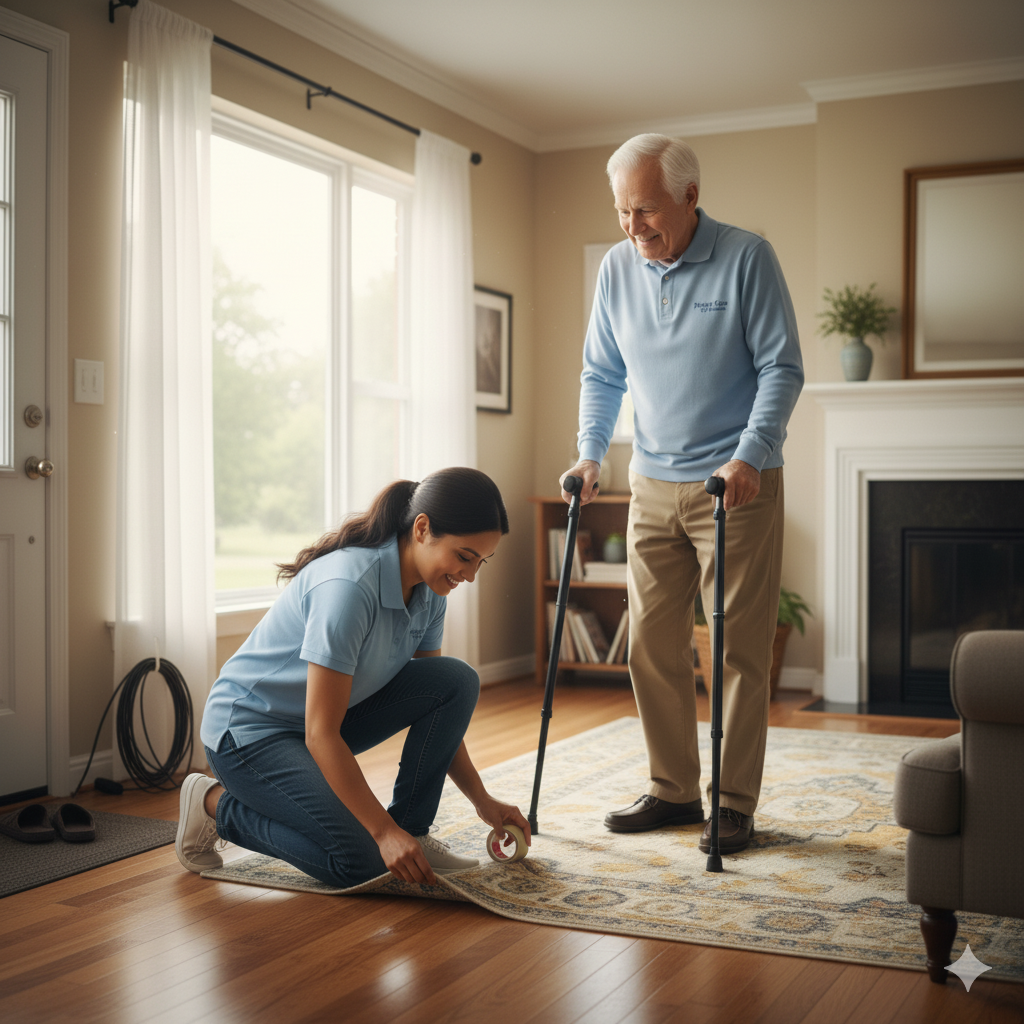
One of the simplest yet most effective ways to prevent falls is to ensure clear pathways throughout the home.
- Remove Tripping Hazards: This includes loose rugs, electrical cords, magazines, shoes, and any other items that might obstruct walking paths.
- Organize and Store: Encourage storing items in easily accessible places to avoid reaching or climbing. Our caregivers can help with light tidying and organization.
2. Enhancing Lighting
Good lighting is critical, especially for those with vision changes.
- Brighten Common Areas: Ensure living rooms, bedrooms, hallways, and stairs are well-lit. Use brighter bulbs where needed.
- Nightlights: Install nightlights in bedrooms, hallways, and bathrooms to illuminate paths during nighttime trips.
- Accessible Switches: Ensure light switches are easy to reach, or consider touch lamps or clapper lights.
3. Securing Bathrooms
Bathrooms are notorious for falls due to slippery surfaces and tight spaces.
- Grab Bars: Install grab bars near toilets and in the shower/tub area.
- Non-Slip Surfaces: Use non-slip mats or strips in the shower/tub.
- Raised Toilet Seats: Consider a raised toilet seat for easier transfers.
- Shower Chairs: A shower chair or bench can provide a safe place to rest while bathing. Our caregivers can provide discreet assistance with bathing and personal care.

4. Focusing on Footwear and Assistive Devices
The right gear makes a huge difference in mobility and stability.
- Proper Footwear: Encourage wearing non-slip, low-heeled shoes or slippers with good traction—even when indoors. Avoid walking in socks alone, especially on smooth surfaces.
- Assistive Device Checks: Ensure walkers, canes, or wheelchairs are properly fitted, in good working condition, and used consistently. Our caregivers can remind clients to use their devices and ensure they are always within easy reach.
5. Managing Physical Risks and Medications
Addressing physical factors is just as important as fixing the environment.
- Encouraging Movement: While we are not physical therapists, encouraging gentle, approved exercises (like light stretching or walking with assistance) can help maintain strength and balance.
- Medication Reminders: Many medications can cause dizziness or drowsiness, increasing the risk of a fall. Patient Care Of Houston caregivers provide crucial medication reminders and can note if a client seems unusually unsteady after taking certain pills, which can then be reported to the family and medical team.
- Hydration and Nutrition: Caregivers assist with meal preparation and hydration, preventing weakness or faintness caused by poor nutrition or dehydration.
Your Loved Ones in Safety and Peace of Mind
Creating a fall-proof home is an ongoing process that requires vigilance and care. At Patient Care Of Houston, our non-medical caregiving services go beyond companionship and ADLs; they provide a crucial layer of safety oversight. Our trained caregivers are an extra set of eyes and hands, helping to mitigate hazards, assist with safe transfers, and ensure safe ambulation within the home. We work with you and your loved one to maintain independence while minimizing risk.
Would you like to schedule a free, in-home safety assessment with Patient Care Of Houston to identify potential fall risks in your loved one’s home?
Visit @patientcareofhouston
📞 713-393-7738